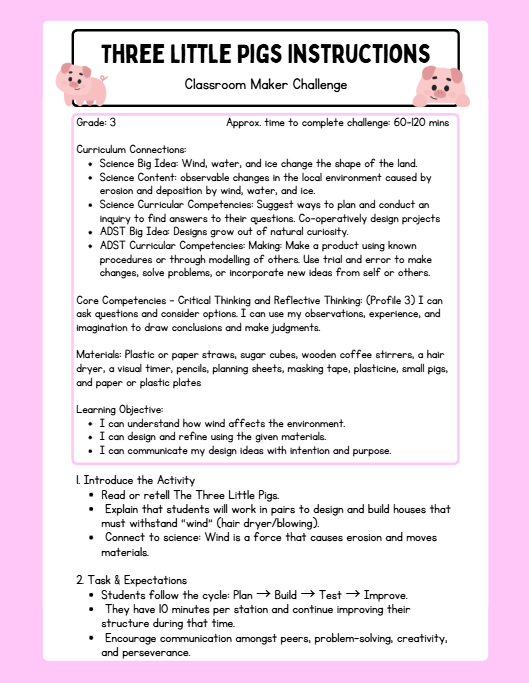
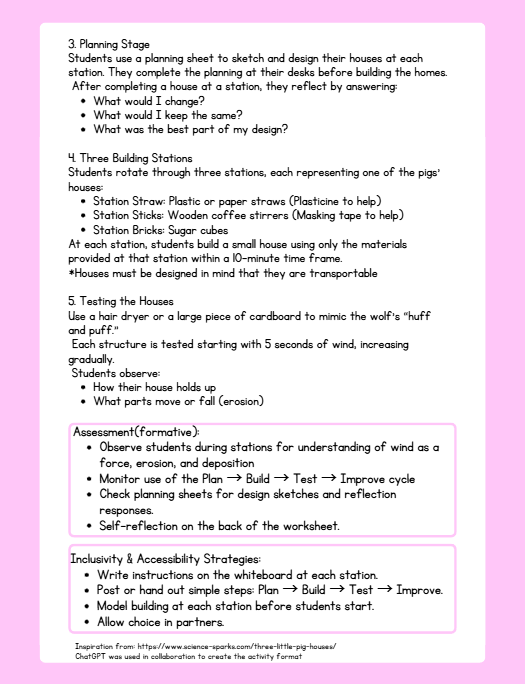
An outline of the challenge:
Curriculum Connections are from BC’s Curriculum!
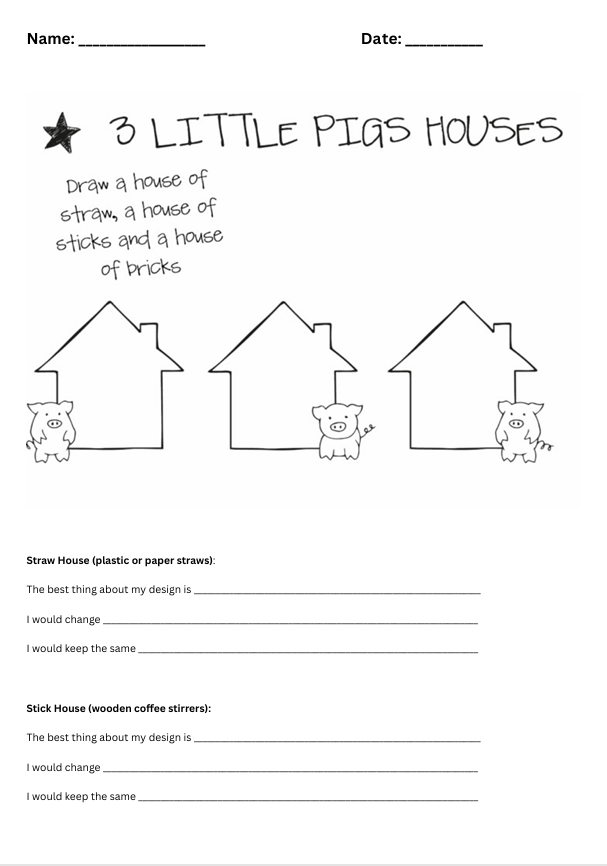
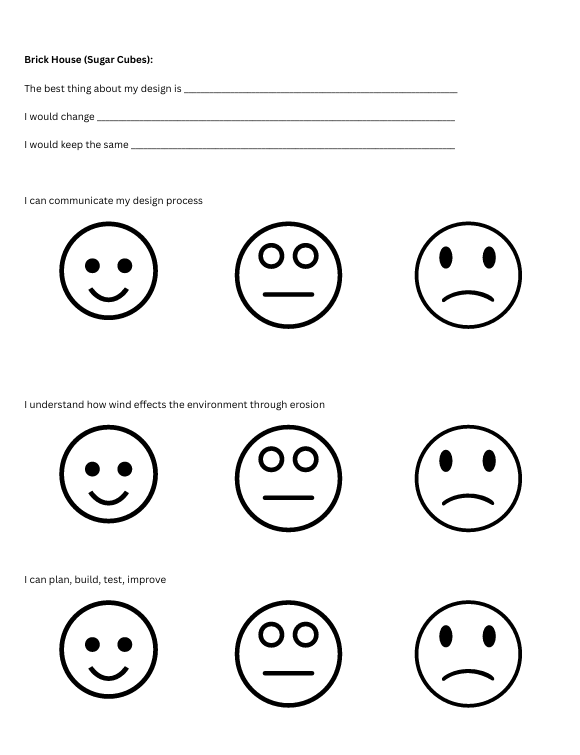
Maker Challenge Worksheet:
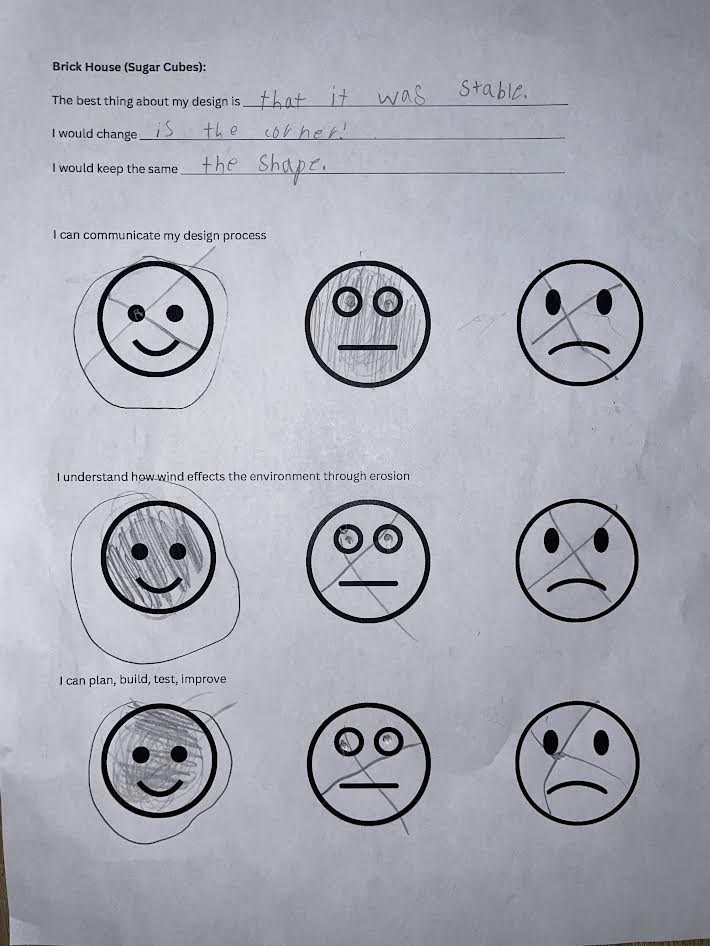
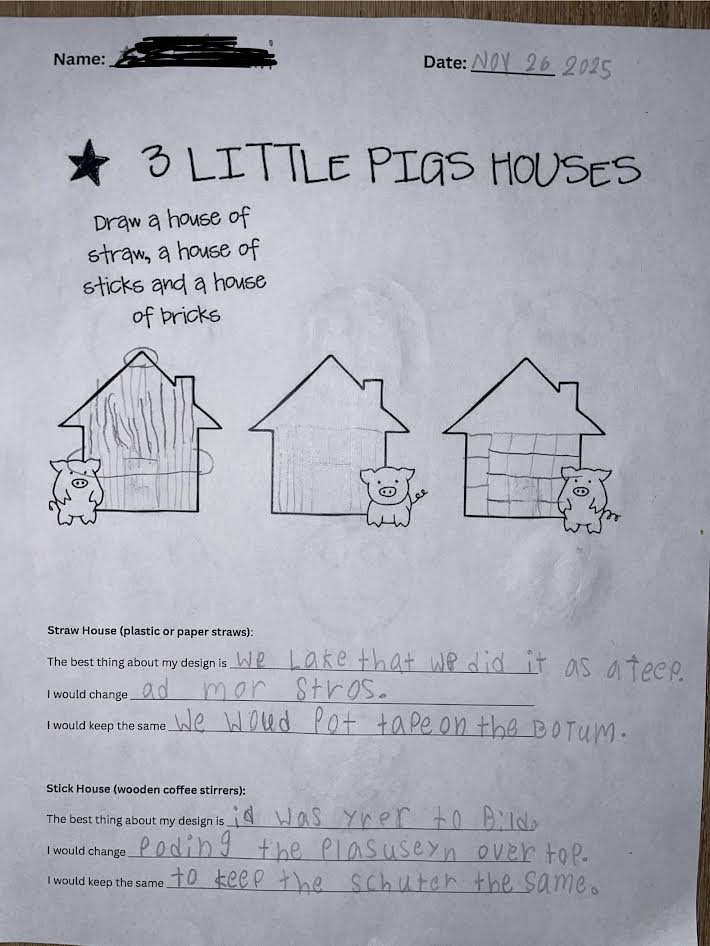
Student Examples of the Worksheet:


Station Signage:
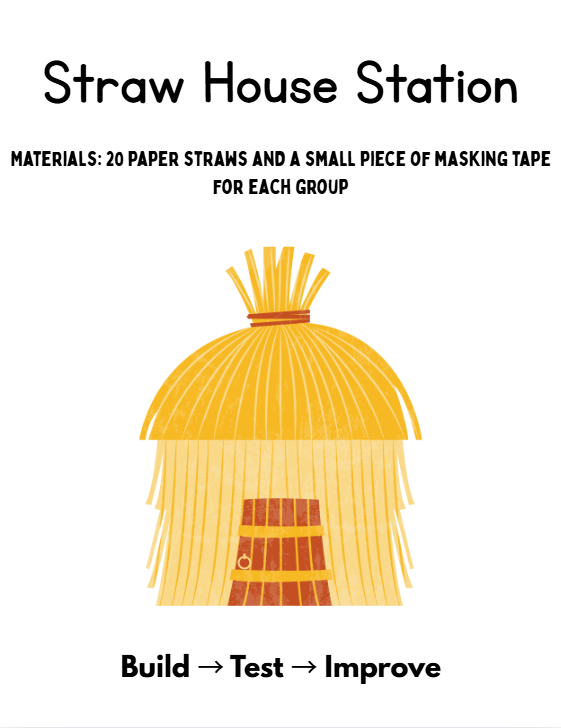
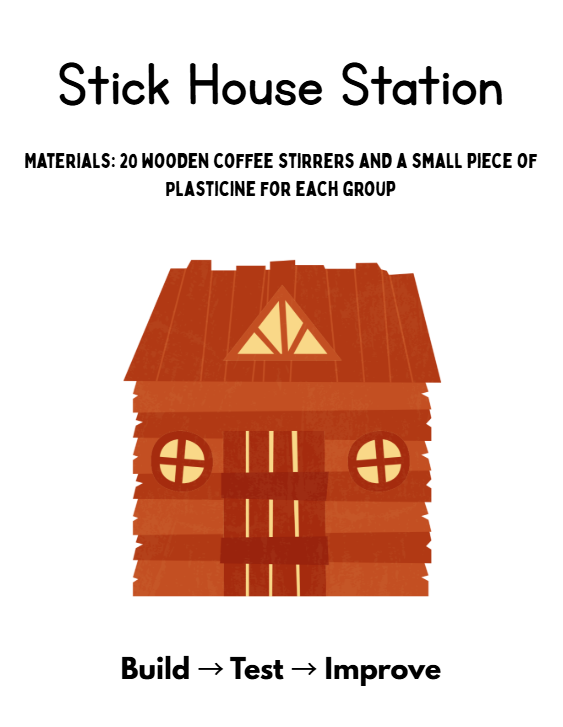
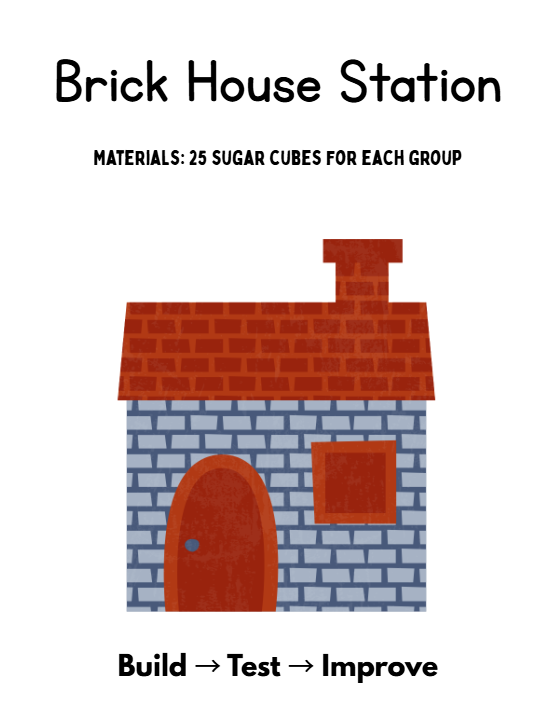
*I printed out one of each of these signs and placed them at the station tables for students to refer to when creating their houses.
Reflection:
Inspiration:
My inspiration for the maker challenge came from wanting to teach a lesson connected to wind, specifically erosion, in the B.C. Curriculum. While searching online for ideas, I wasn’t finding anything that stood out to me. My instructor, Ryan Mackenzie, suggested I look up the Three Little Pigs challenge because it incorporates the concept of wind. I then found a resource on ScienceSparks.com that offered helpful ideas; however, I modified and adapted these ideas when creating my final maker challenge.
Recap of Students Completing the Activity:
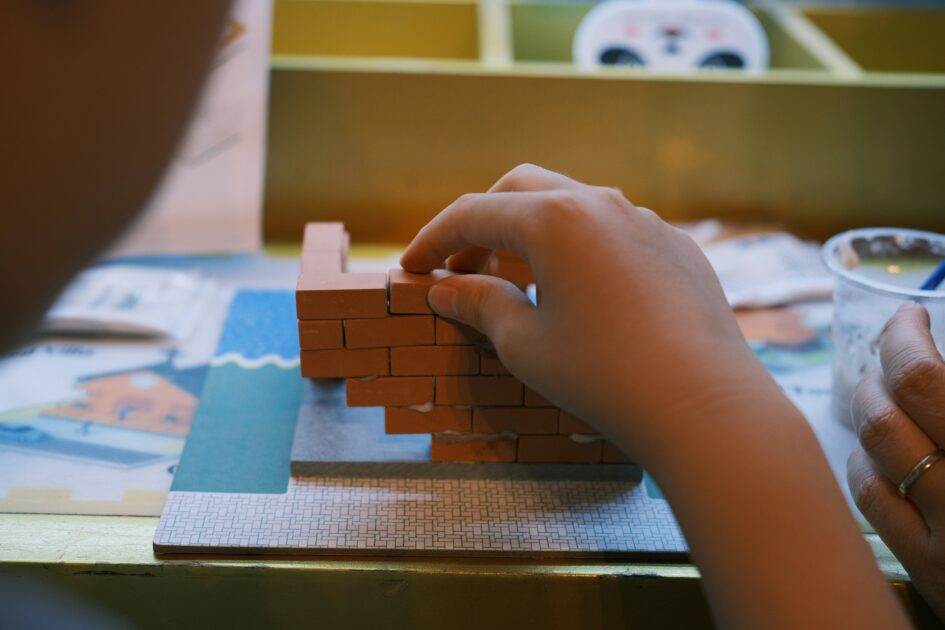
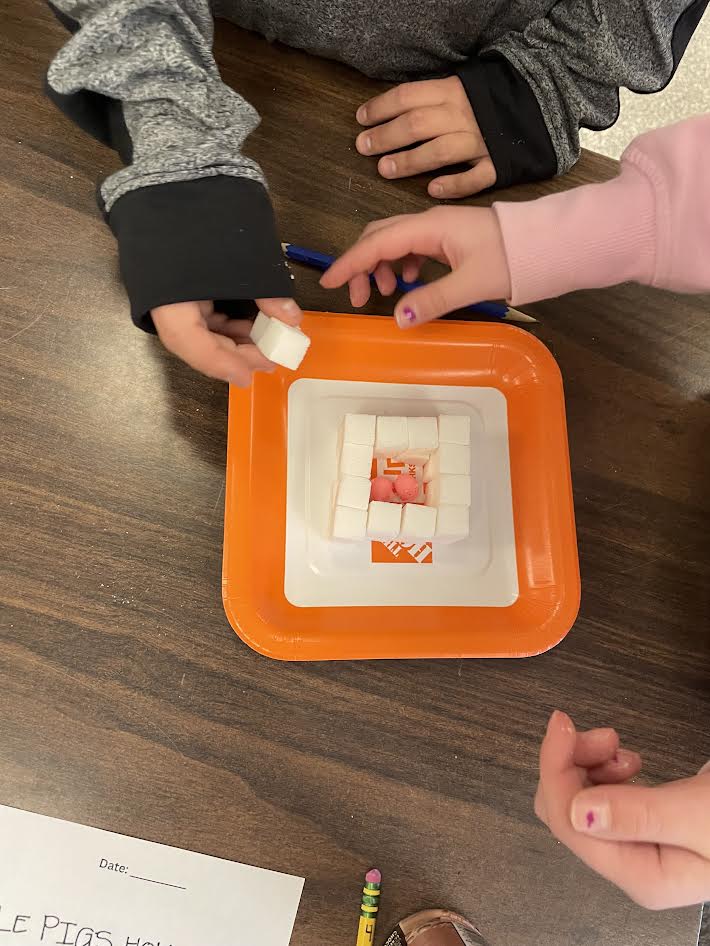
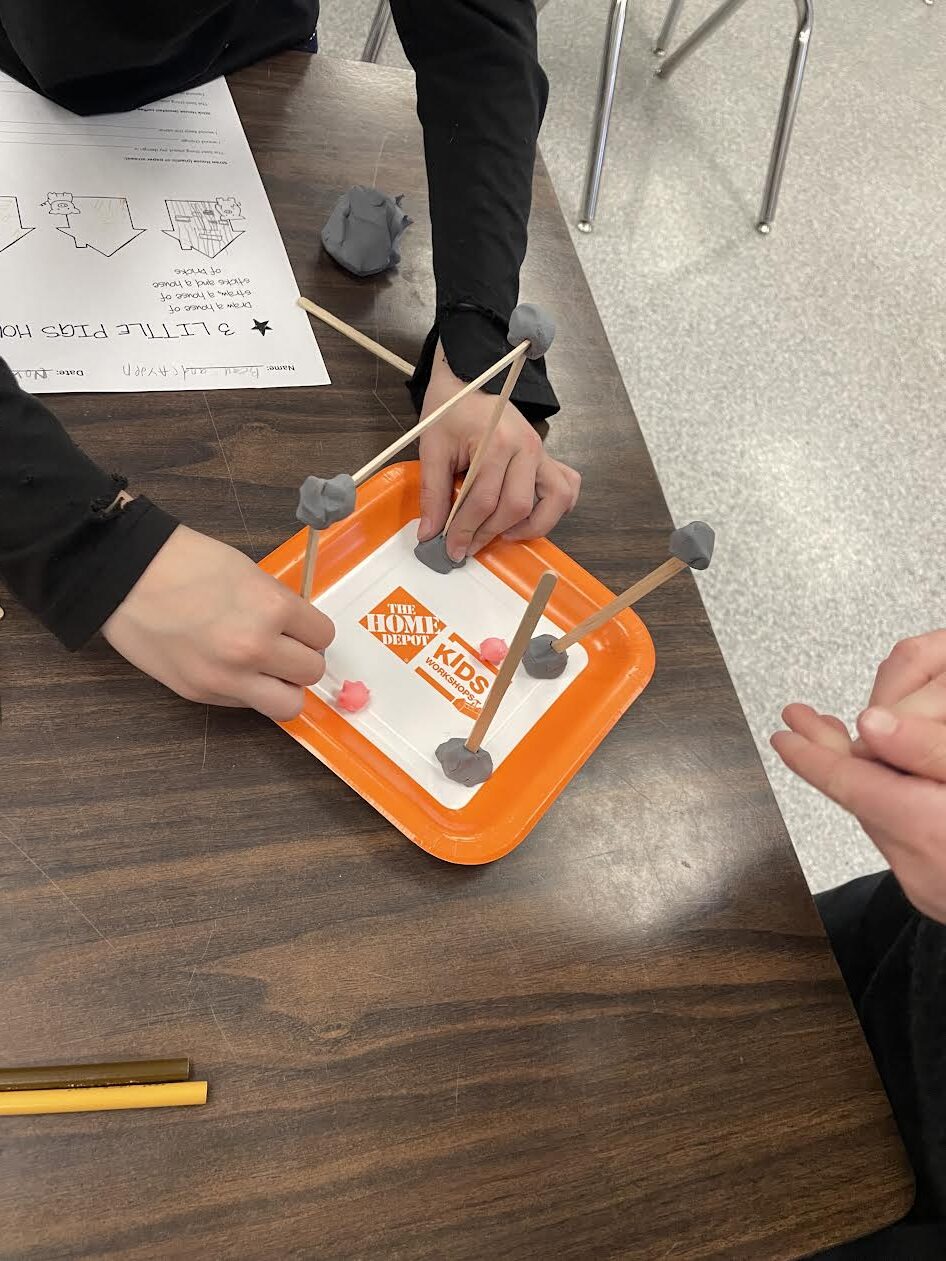
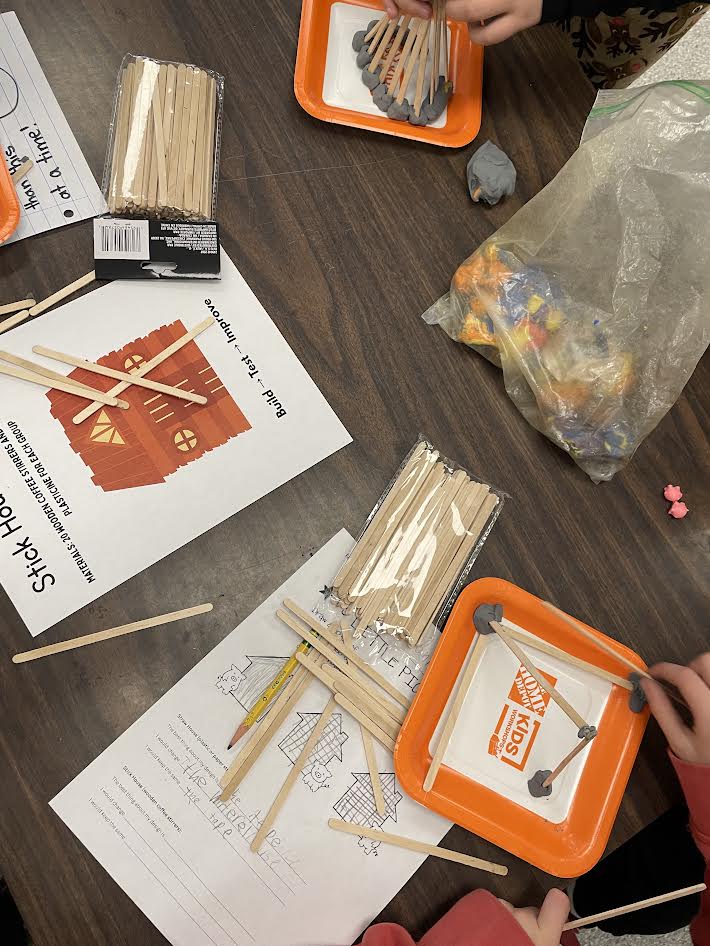
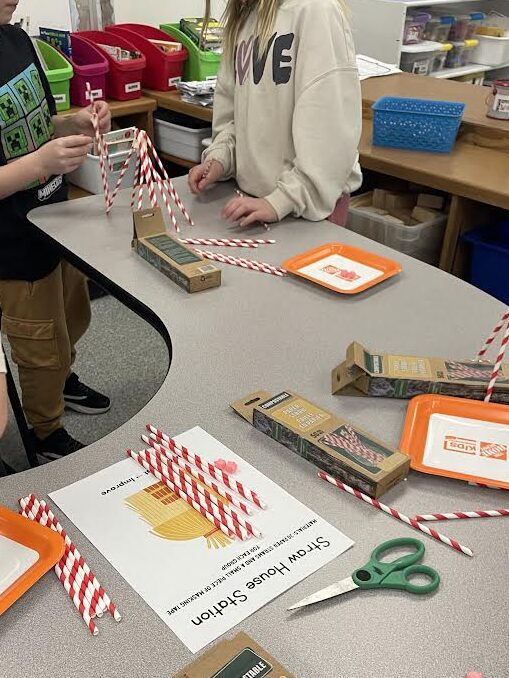
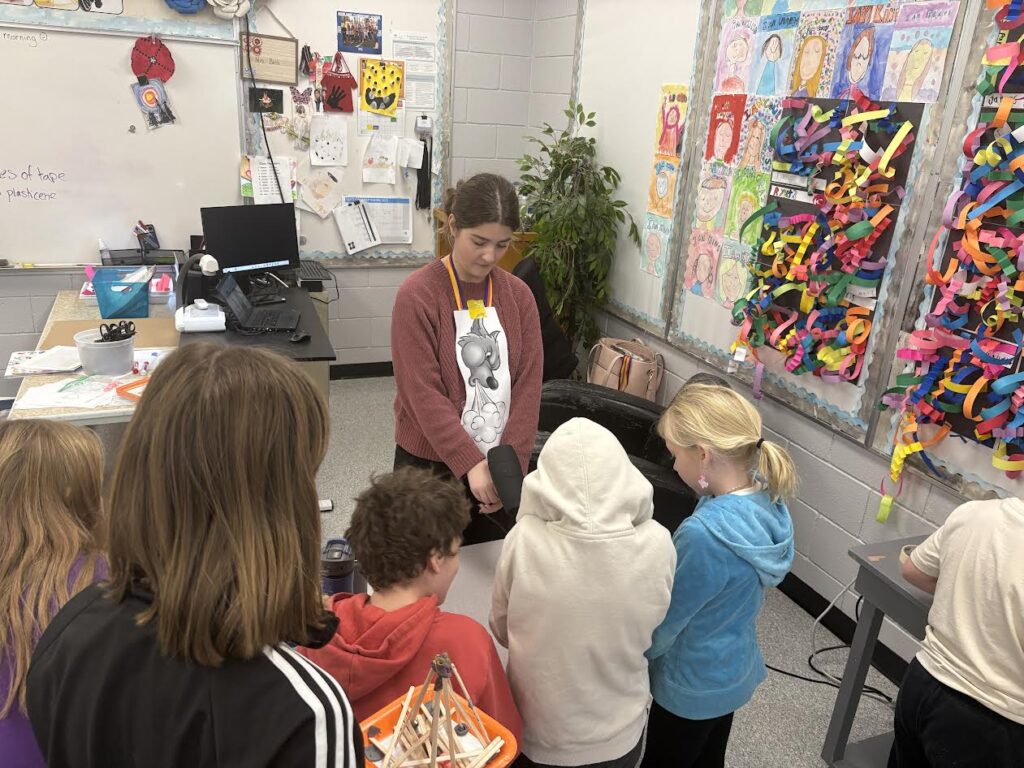
The activity was a great success when I tested it with my Grade 3 practicum students! To begin, I played a video of The Three Little Pigs illustrated by Giuseppe Di Lernia on the Smartboard, and the students were highly engaged throughout. All students participated in designing, creating, and revising their structures. Initially, I thought they would need more than 10 minutes per station; however, by the second house station, they had already begun to grasp the process. Students were excited to test their houses and make improvements to strengthen their designs even further.
Planning Considerations:
- Make sure you have enough materials for your class to work in pairs. For a class of 20, I used one box of sugar cubes, about 80 straws and coffee stirrers, one cube of plasticine, 10 paper plates, one roll of masking tape, and one hair dryer for testing the houses. All materials were reused throughout the activity except for the tape and paper plates.
- Provide extra time if possible, but remind students to stay on task and continue iterating rather than stopping after one successful design.
- Actively monitor that students complete the reflection sentences on their worksheets before moving to the next station.
- If possible, have more than two adults supporting, as supervising the class while also acting as the “Big Bad Wolf” can be challenging.
How Students Iterated:
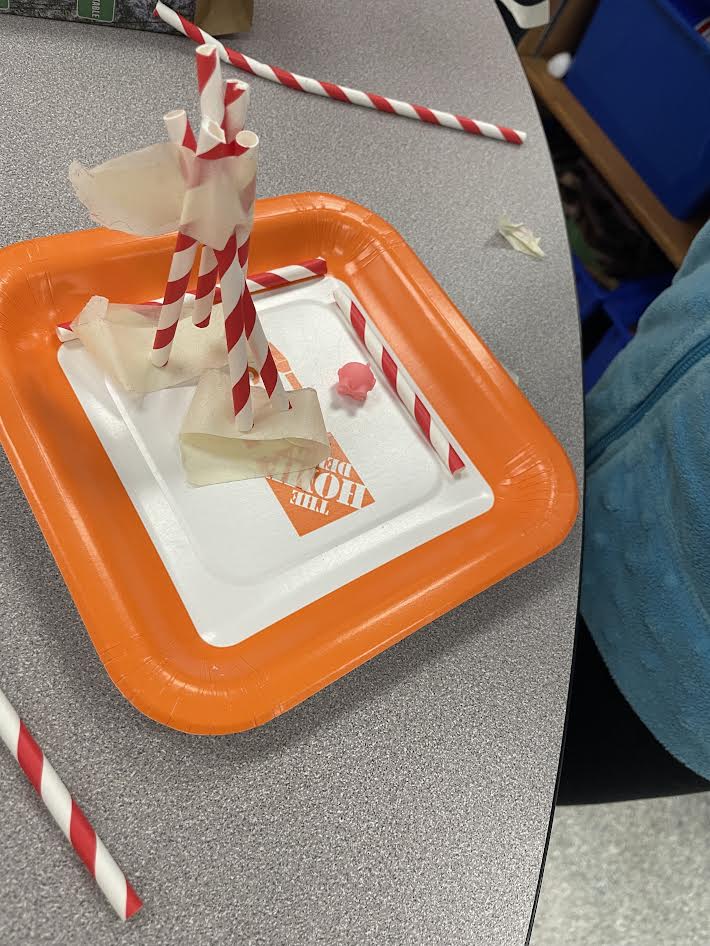
Students iterated by testing their houses and identifying which parts were weakest. They then made small adjustments or redesigns to improve stability using the same materials. With each round of testing, their structures became stronger and more intentional.
How Technology/Tools/Makerspace Concepts Were Used:
- Technology: The Smartboard was used to show the Three Little Pigs video, providing a visual and engaging introduction to the building challenge.
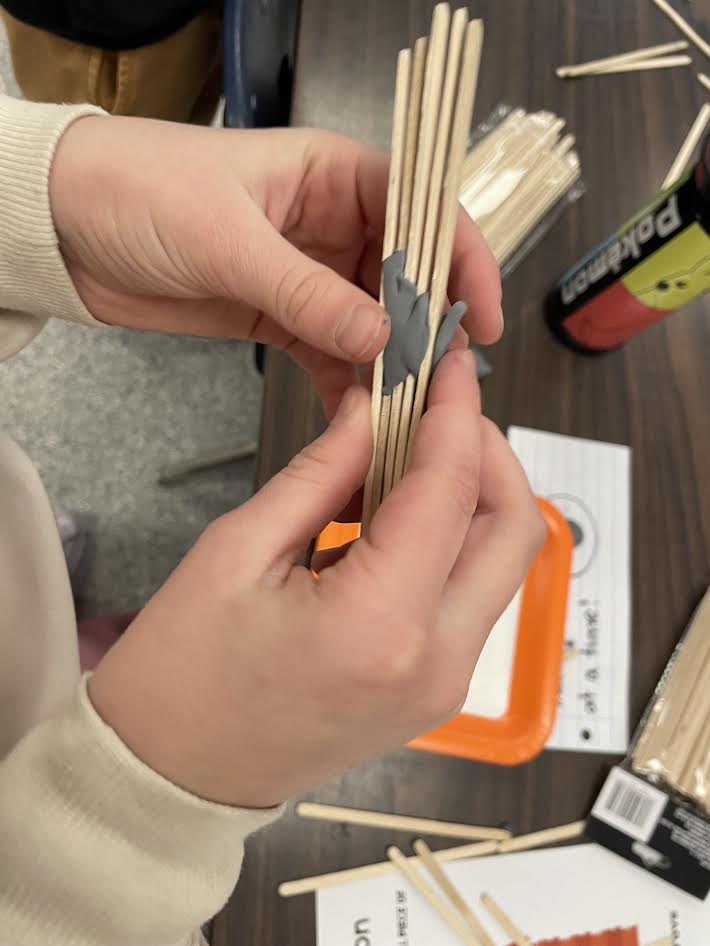
- Tools: Students used simple tools and materials such as straws, sugar cubes, coffee stirrers, plasticine, tape, and scissors to construct and test their houses.
- Makerspace concepts: Students applied makerspace thinking by designing/drawing, testing with wind, and iterating on their structures to improve strength and stability.
How Students Collaborated:
Students worked together by designing, creating, and iterating as a team, sharing ideas, making joint decisions, and avoiding working as individuals. They supported one another during challenges, offering suggestions and trying out each other’s ideas.
Learning Objectives:
- “I can understand how wind affects the environment”: Students met this objective by designing houses to withstand wind, allowing them to see how wind can move or impact real-world structures.
- “I can design and refine using the given materials”: Students worked only with the materials at each station, problem-solved through challenges, and adapted their designs as needed.
- “I can communicate my design ideas with intention and purpose”: After testing, students explained their design choices, shared improvements, and collaborated with peers to justify and refine their ideas.
What I Would Do Different Next Time:
One thing I would do differently next time is ensure that both students take turns answering the questions on the worksheet; I found that many groups had one student take over as the scribe, which limited equal participation.
Connections to Course Readings:
“We believe that this is the kind of teaching and learning with which we want students to be engaged, in part so that they are better prepared to solve problems of the future” (Cohen et al., year, p. 134).
This quote connects to the maker challenge because the activity got students genuinely engaged in hands-on learning. As they built and tested their houses, they used critical and reflective thinking to solve problems rather than simply following steps. They also collaborated by sharing ideas and improving their designs together. This is, at heart, the framework for the maker movement in classrooms, which prepares students to solve the problems of the future.
Leave a Reply
You must be logged in to post a comment.